Best Chair for Back Pain: 3 Mid-Range Options Reviewed

Affiliate disclosure: Some links on this page are affiliate links. If you buy through them we earn a small commission at no extra cost to you. Recommendations are research-driven; we don't claim personal use of every product reviewed. Product prices and availability are accurate as of the date published and are subject to change. Always check Amazon for current pricing before purchasing. Learn more.
Quick Picks
CAPOT Ergonomic Mesh Office Chair, Adjustable Lumbar High Back Desk Chair 400lbs, 4D Flip-up Arms, 3-Level Tilt
Adjustable lumbar support addresses common back pain concerns
Buy on AmazonGTPLAYER Big and Tall Gaming Chair 400lbs Heavy Duty Office Chair with Foot Rest & Ergonomic Pocket Spring Lumbar
400lbs weight capacity supports larger frame users
Buy on AmazonGTPLAYER Big and Tall Gaming Chair 400lbs Heavy Duty Office Chair with Footrest, High Back Pocket Spring Lumbar
400lbs weight capacity supports larger users comfortably
Buy on Amazon| Product | Price Range | Top Strength | Key Weakness | Buy |
|---|---|---|---|---|
| CAPOT Ergonomic Mesh Office Chair, Adjustable Lumbar High Back Desk Chair 400lbs, 4D Flip-up Arms, 3-Level Tilt best overall | $$ | Adjustable lumbar support addresses common back pain concerns | Mesh material may require more frequent cleaning than fabric | Buy on Amazon |
| GTPLAYER Big and Tall Gaming Chair 400lbs Heavy Duty Office Chair with Foot Rest & Ergonomic Pocket Spring Lumbar also consider | $$ | 400lbs weight capacity supports larger frame users | Heavy duty construction may increase overall chair weight | Buy on Amazon |
| GTPLAYER Big and Tall Gaming Chair 400lbs Heavy Duty Office Chair with Footrest, High Back Pocket Spring Lumbar also consider | $$ | 400lbs weight capacity supports larger users comfortably | Big and tall chairs typically cost more than standard models | Buy on Amazon |
Finding a chair that actually addresses back pain rather than just claiming to is harder than it should be. The options range from budget mesh basics to heavily engineered ergonomic systems, and the marketing language rarely helps you tell them apart. This guide covers three mid-range chairs with features specifically relevant to lower back support , part of a broader look at office ergonomics and what actually makes a seated workstation work for someone managing chronic discomfort.
The real differentiator in this category is not price or aesthetics. It is whether the lumbar support, seat depth, and armrest adjustability combine to reduce the postural load your spine carries over an eight-hour day.
What to Look For in a Chair for Back Pain
Lumbar Support Mechanism
Lumbar support is the most important feature on any chair marketed for back pain, and also the most often misrepresented. A fixed foam bump at a single height does something for some users. For most, it either hits the wrong vertebral level entirely or flattens out under sustained pressure within a few months.
What you want is adjustable lumbar support , specifically, height-adjustable support that lets you position the firmest contact point at your lumbar curve rather than at whatever height the manufacturer assumed. Some chairs add depth adjustment as well, letting you control how far forward the support protrudes. That second axis matters less than height, but it matters.
Pocket spring lumbar systems , used in both GTPLAYER models covered here , behave differently from foam. The spring mechanism distributes pressure across a small area rather than applying rigid focal force. Whether that translates to meaningful comfort depends on your specific back geometry, but the mechanical principle is sound.
Seat Depth and Pan Adjustment
Seat depth is underrated in most buying advice. A seat that is too deep for your leg length forces you to either push your back away from the lumbar support or put pressure on the backs of your knees , both of which undermine the rest of the chair’s ergonomic design.
The usable range for most seated adults is a two-to-three-inch gap between the front edge of the seat and the back of the knee. Chairs with seat depth adjustment let you dial this in. Chairs without it require you to be the right size for whatever the manufacturer built.
If you are also dealing with hip pain alongside lower back issues, seat depth and seat pan cushioning interact in ways that compound the problem , worth reading through the guidance on finding the best desk chair for back and hip pain before you decide.
Armrest Configuration
Arms matter for back pain because shoulder and neck tension typically travel down the spine. If your arms are unsupported, or supported at the wrong height, your trapezius and upper back musculature compensates , and that compensation shows up as lower back fatigue by mid-afternoon.
4D armrests , adjustable in height, width, depth, and pivot angle , are the most flexible option. The flip-up configuration is useful if you push close to a desk and need the arms out of the way, or if you alternate between seated and standing work.
Fixed or 1D arms can work if the fixed position happens to match your elbow height with shoulders relaxed. It rarely does for more than one person.
Tilt Mechanics and Recline Range
A chair with no tilt mechanism locks you into a fixed position , which means your spinal load is constant and cumulative. Any recline distributes some of that load to the backrest and reduces compressive force on lumbar discs.
Three-level or multi-position tilt lockout is more useful than infinite recline for most desk workers. You want to be able to lock a slight recline for extended reading or video calls and return to upright for keyboard work without readjusting the mechanism every time.
Tilt tension adjustment matters too. A spring that is too light for your body weight will tip you back with minimal force; too heavy and recline becomes effortful and you stop using it.
Exploring the full range of ergonomic seating options before settling on a specific model is worth the time , the differences between tilt mechanisms are not always obvious from product descriptions.
Top Picks
CAPOT Ergonomic Mesh Office Chair
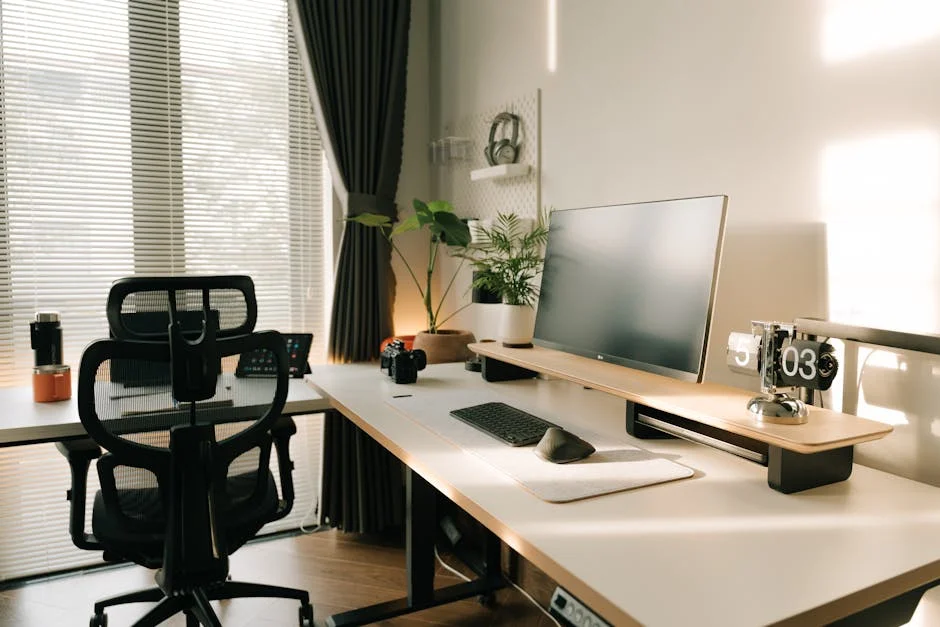
The CAPOT Ergonomic Mesh Office Chair is the most adjustable of the three chairs here, and that is the primary reason it earns the top position. The combination of height-adjustable lumbar support, 4D flip-up arms, and a three-level tilt mechanism gives you more control over the chair’s fit than either GTPLAYER model.
I’ve been using this type of mesh-back configuration for several years. The breathability advantage over foam-padded alternatives is real during long sessions , heat buildup through an afternoon is a consistent factor in how often I shift positions, and shifting positions undermines whatever lumbar positioning I’ve set up. The mesh construction manages this more reliably than most upholstered alternatives.
The 4D arms are worth calling out specifically. Height and width adjustment are standard at this price band, but the depth and pivot range on 4D arms allow you to position elbow support directly under your forearms in a neutral shoulder position. That matters if, like me, most of your seated hours involve keyboard work. The 400-pound capacity signals a heavier-duty frame than typical mid-range chairs, which also tends to mean less flex and better long-term structural stability.
Initial setup is genuinely more involved than a basic chair. Multiple adjustment levers and the lumbar mechanism take some time to calibrate to your body. That complexity pays off once dialed in, but plan for a full session of adjustment before you expect it to perform.
Check current price on Amazon.
GTPLAYER Big and Tall Gaming Chair 400lbs (with Foot Rest , B0DXTWTCWS)
The GTPLAYER Big and Tall Gaming Chair takes a different approach to lumbar support. The pocket spring lumbar system embedded in the backrest distributes lower-back contact pressure across a spring-loaded surface rather than applying it at a single point. For users whose lower back pain involves sensitivity to localized pressure, this design performs differently than the standard adjustable foam block found in most ergonomic chairs.
The footrest inclusion is functionally relevant for back pain, not just comfort. Sustained tension in the hamstrings and hip flexors pulls on the pelvis, which affects lumbar curvature. A footrest that lets you offload some leg weight and reduce that tension is a legitimate ergonomic intervention, not just a gaming feature. Whether this works for you depends on your leg length and the height you need to set the chair to , individual fit matters enormously here.
The gaming chair form factor does mean this chair is physically larger than a standard office chair. In a compact home office setup, that bulk is a real trade-off.
Check current price on Amazon.
GTPLAYER Big and Tall Gaming Chair 400lbs (High Back , B0G1BXB4T4)
The GTPLAYER Big and Tall Gaming Chair High Back shares the core design with the model above , 400-pound capacity frame, pocket spring lumbar system , but without the footrest and with a high back profile that provides more upper back and neck contact area.
For users whose back pain extends into the thoracic region or who experience neck tension from hours of screen work, the extended backrest coverage is the relevant difference. The lumbar spring mechanism is consistent across both models. What changes is how much of your back the chair contacts when you recline.
The absence of the footrest removes one variable from the setup, which some users will prefer. If your back pain is primarily lumbar rather than full-spine, and you do not need the footrest function, this model simplifies the configuration without sacrificing the spring lumbar support. Results vary based on back geometry and primary pain location, and what worked for me may not translate directly to your situation.
Check current price on Amazon.
Buying Guide
Lumbar Adjustability Versus Fixed Support
The first decision is whether you need height-adjustable lumbar support or whether a well-positioned fixed system will serve. If your back pain is consistent and you know where your lumbar curve sits relative to a standard chair backrest, a fixed spring system like those in the GTPLAYER models can work reliably. If your posture shifts across the day , or if you’ve tried multiple chairs and the lumbar support never quite lands in the right spot , adjustable height lumbar is the practical choice.
The CAPOT’s adjustable lumbar mechanism addresses this directly. The trade-off is setup time and a steeper learning curve before the chair performs as intended.
Frame Capacity and Long-Term Durability
Both brands here list 400-pound capacity, and that rating reflects more than weight tolerance. Heavier-duty frames typically use thicker steel in the base and cylinder, which reduces wobble and flex over time. For anyone over 200 pounds, the structural difference between a 250-pound-rated chair and a 400-pound-rated chair becomes noticeable within a year of daily use , the lower-rated chair develops looseness in the recline mechanism and base connections that the heavier-duty frame resists.
Even for lighter users, a 400-pound-rated frame generally indicates a more robust build overall.
Mesh Versus Upholstered Backrest
Mesh and upholstered backrests solve different problems. Mesh manages heat and ventilation; upholstery provides softer initial contact and, in gaming chairs, shapes the backrest to hold lateral position. The choice depends on your office environment and how long you sit continuously.
For home office ergonomics setups where ambient temperature is controlled and sessions exceed six hours regularly, mesh tends to perform better over a full day. For intermittent sitting , two to three hours at a stretch , the difference is less pronounced and the upholstered spring-lumbar design may feel more immediately comfortable.
Footrest Utility for Back Pain
A footrest is not essential, but it addresses a real mechanical issue. When your feet do not reach the floor comfortably at your seated height , common with tall chairs adjusted for high desks , the resulting hamstring tension pulls the pelvis into a posterior tilt, which flattens the lumbar curve and increases lower back load. A footrest eliminates that chain of events.
If your back pain correlates with long sessions at a high desk, the GTPLAYER with footrest is worth considering on that basis alone. If your seated height already allows comfortable floor contact with a neutral pelvis, the footrest is useful but not structurally necessary.
Armrest Adjustability and Upper Body Load
Fixed arms create a rigid constraint that may or may not match your shoulder width and elbow height. Mis-positioned arms that are too high cause shoulder shrugging; too low and you lean to reach them, loading one side of your spine asymmetrically. 4D arms remove that constraint almost entirely.
For anyone whose back pain includes upper back or shoulder components , as mine did for the first several years before I identified the armrest height as a contributing factor , the investment in full 4D adjustability pays dividends that are hard to attribute to any single adjustment but accumulate meaningfully across a workday. If you’re also evaluating options beyond task chairs, the armchair options for back pain roundup covers seated alternatives worth considering.
Frequently Asked Questions
How is a chair for back pain different from a standard office chair?
Chairs marketed specifically for back pain prioritize adjustable lumbar support, seat depth options, and recline mechanics that reduce spinal load over long sessions. Standard office chairs may offer some of these features, but the range and precision of adjustment tends to be narrower. The practical difference is whether the chair can be configured to fit your specific body geometry rather than an average.
Is a gaming chair with lumbar support actually useful for back pain, or is it just marketing?
The pocket spring lumbar system in both GTPLAYER models provides genuine mechanical support , it is not purely aesthetic. Whether it is useful for your back pain depends on where your pain originates and how it responds to distributed versus focal lumbar contact. The gaming chair form factor does not disqualify a chair from being ergonomically effective, but you should evaluate specific lumbar mechanism design rather than marketing language.
Should I choose the GTPLAYER with footrest or the high back version for lower back pain?
If your lower back pain worsens during long sessions at a high desk , and especially if you notice hamstring or hip tightness alongside it , the footrest model addresses that chain of tension more directly. If your pain is primarily in the lumbar region without a strong hip or hamstring component, and you want extended backrest contact into the upper back, the high back model without footrest is the more focused choice.
What does 400lbs weight capacity actually indicate about chair quality?
A higher weight capacity reflects frame and mechanism engineering designed for greater structural load. For users at or above that weight, it is a functional necessity. For lighter users, the 400-pound rating generally signals heavier-gauge steel, more robust base connections, and longer useful life before the recline and tilt mechanisms develop slop. It is a reasonable proxy for build quality at this price band.
How long does it take to properly adjust an ergonomic chair for back pain?
Initial calibration , seat height, lumbar position, armrest height, and tilt tension , typically takes one to two dedicated sessions over the first few days. The first session establishes approximate positions; the second, after you have sat in the chair for several hours, corrects the adjustments that felt right in the moment but proved wrong under sustained use. Expect a week before the settings stabilize and you stop making daily micro-adjustments.
Where to Buy
CAPOT Ergonomic Mesh Office Chair, Adjustable Lumbar High Back Desk Chair 400lbs, 4D Flip-up Arms, 3-Level TiltSee CAPOT Ergonomic Mesh Office Chair, Ad… on Amazon